
THE MISSION
1:1 Scale Testing of Human-Rated Autonomous Construction in a High-Variability Terrestrial Environment.
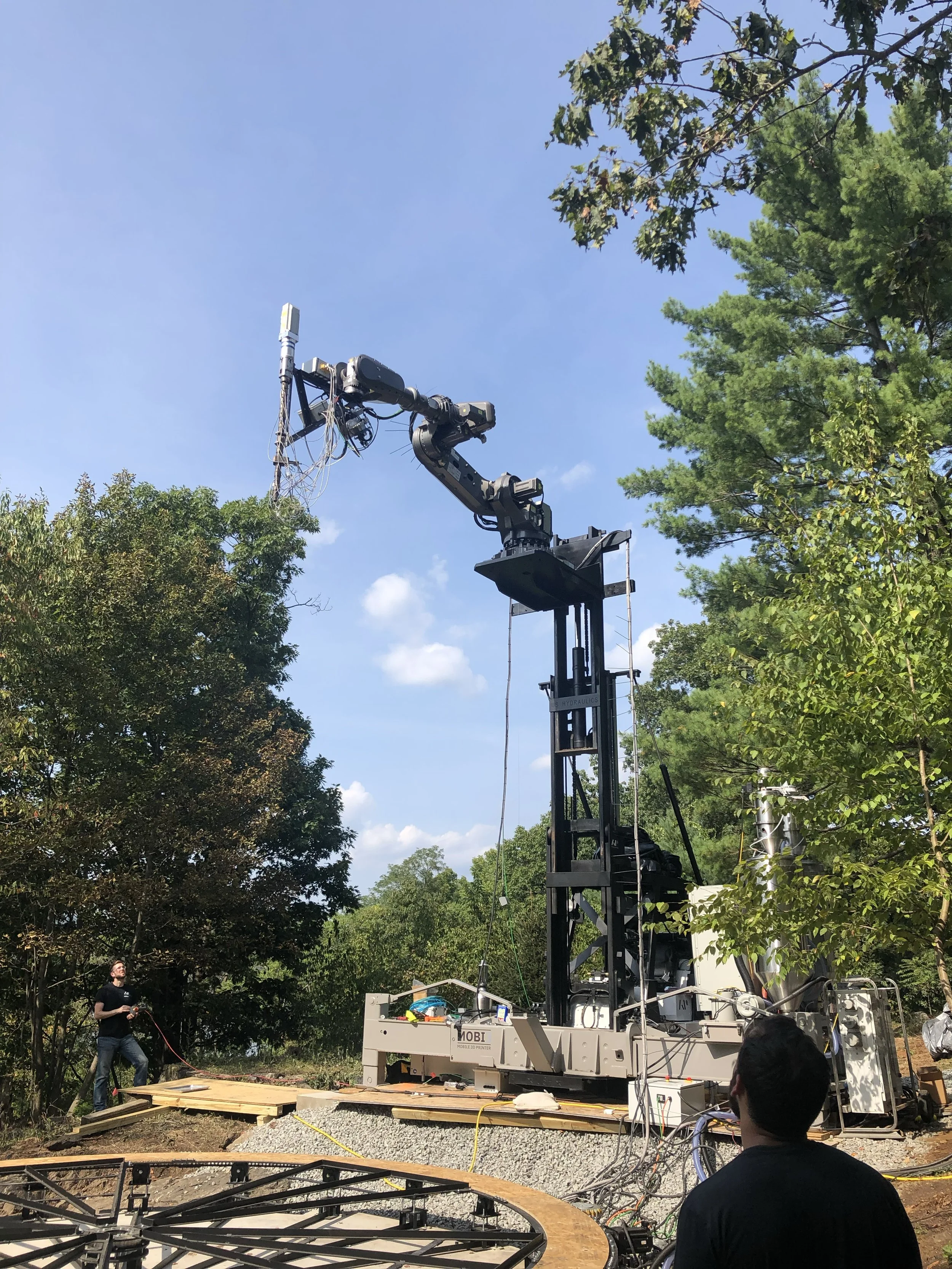
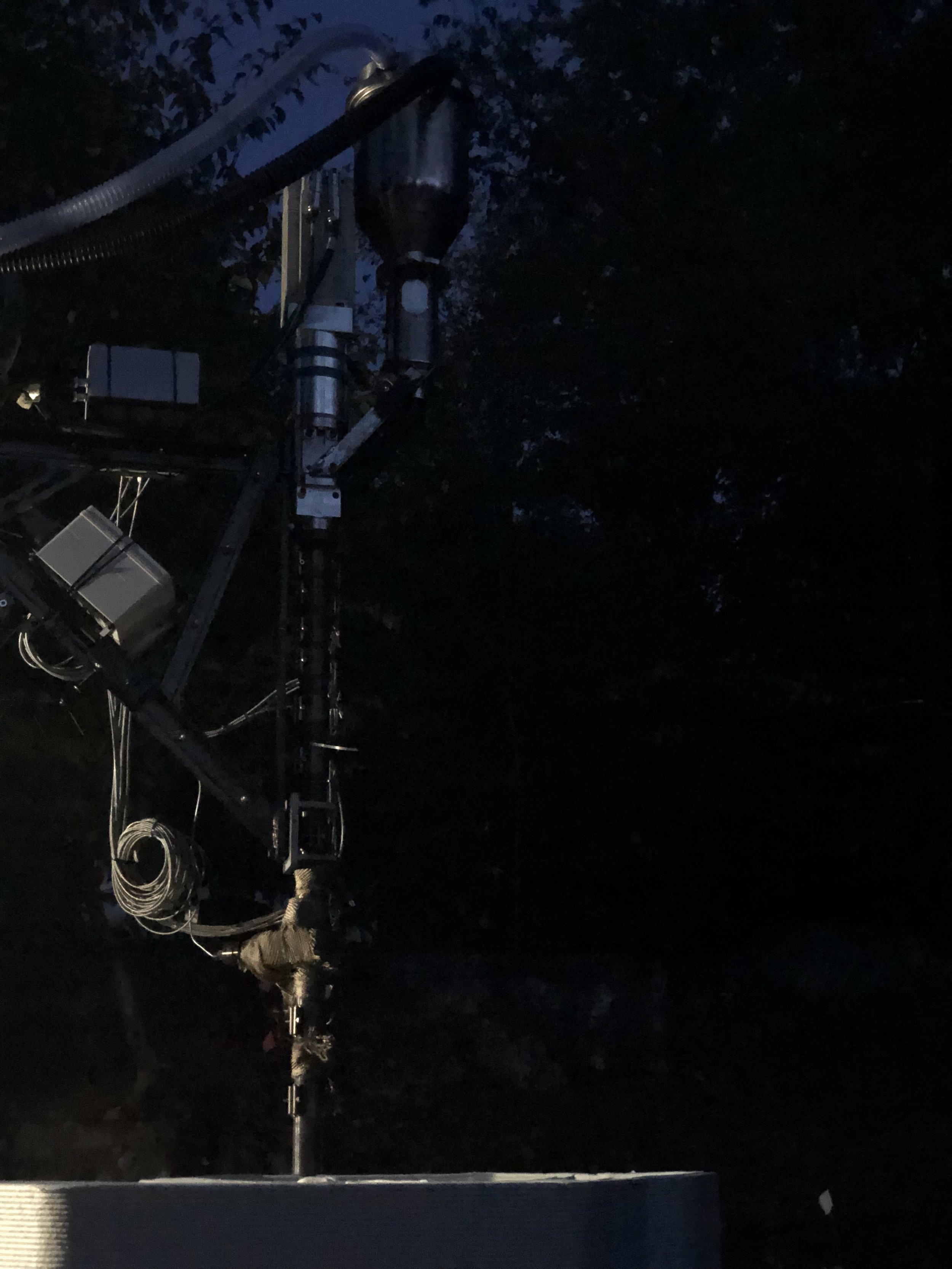
TERA was our high-fidelity terrestrial stress test. By moving out of the lab and into a non-permissive environment, we intentionally pushed our first-generation autonomous systems to their breaking points. TERA was significantly larger than our NASA Centennial Challenge prototype Mars Habitat, requiring a first-ever deployment of a large-scale turntable to print the 18’ diameter, 24’ tall habitat.
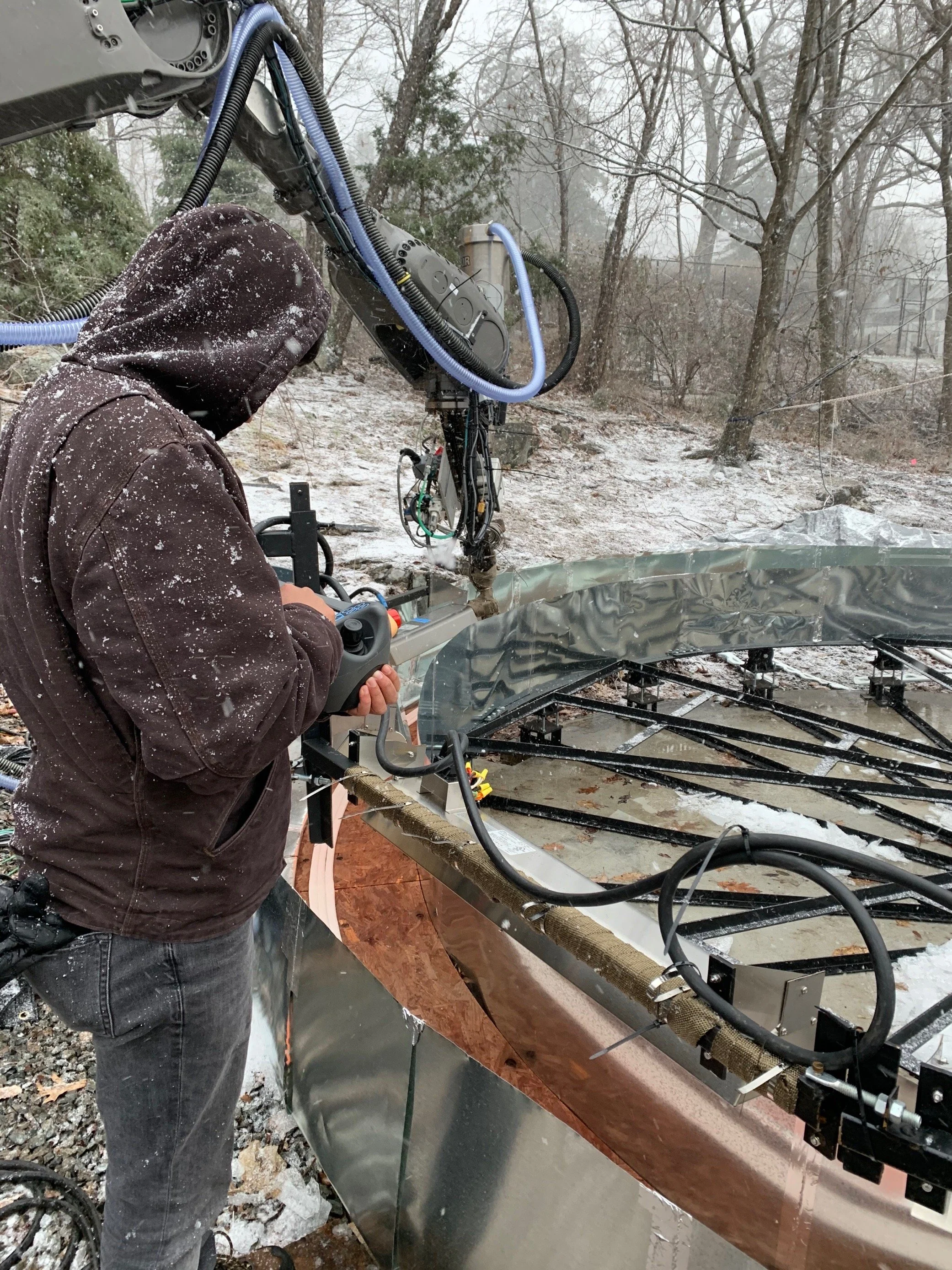
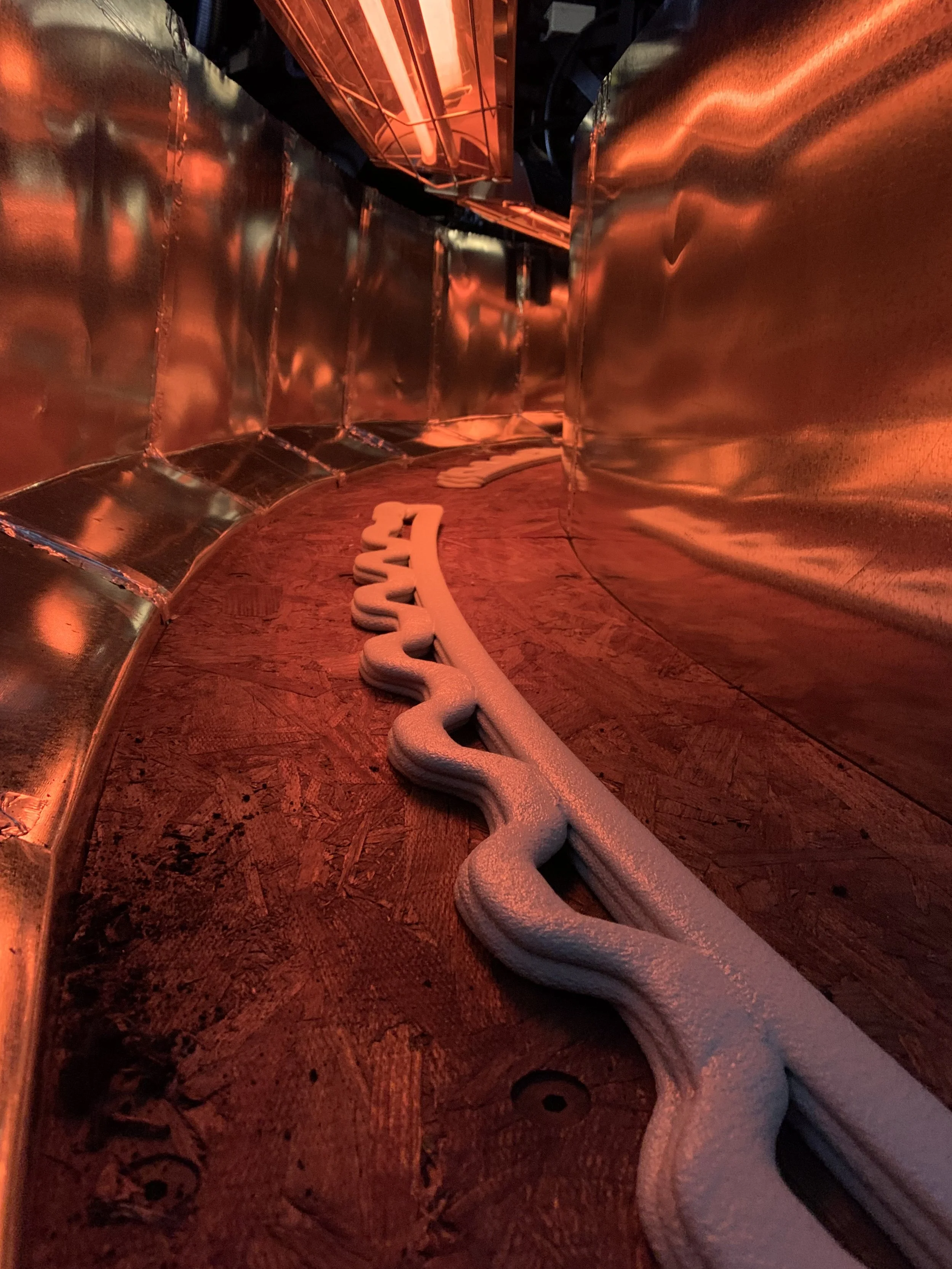
Outside of a favorable climate window, the onset of convective heat loss exceeded the input capacity of our thermoplastic composite deposition system. We attempted to mitigate these losses using a combination of active IR heating coupled with a reflective draft shield to reduce convective onset.
The TERA deployment exposed a "Complexity Paradox": the logistical overhead and setup requirements for environmental mitigation began to outweigh the advantages of in-situ deployment. The lessons learned during the TERA deployment directly informed the development of more environmentally resilient methods, materials, and equipment.
OUTCOMES
Closing the Loop on Materials.
While the TERA analog exposed the challenges of variable-environment additive construction, it achieved a first in material lifecycle validation. Our team successfully decommissioned the structural elements from our NASA Centennial Challenge winning entry and re-pelletized it into new feedstock. This 'Second-Generation Material' was then deployed as the primary print medium for the TERA site.
This validated a critical mission requirement: The ability to recycle and repurpose infrastructure in-situ. Unlike traditional brick or concrete—which represent a 'one-way' energy investment and generate massive waste—our method enables a true circular economy. On the Moon or Mars, where every gram of mass is a strategic asset, the ability to 'print-crush-reprint' is the difference between a temporary outpost and a sustainable colony."


